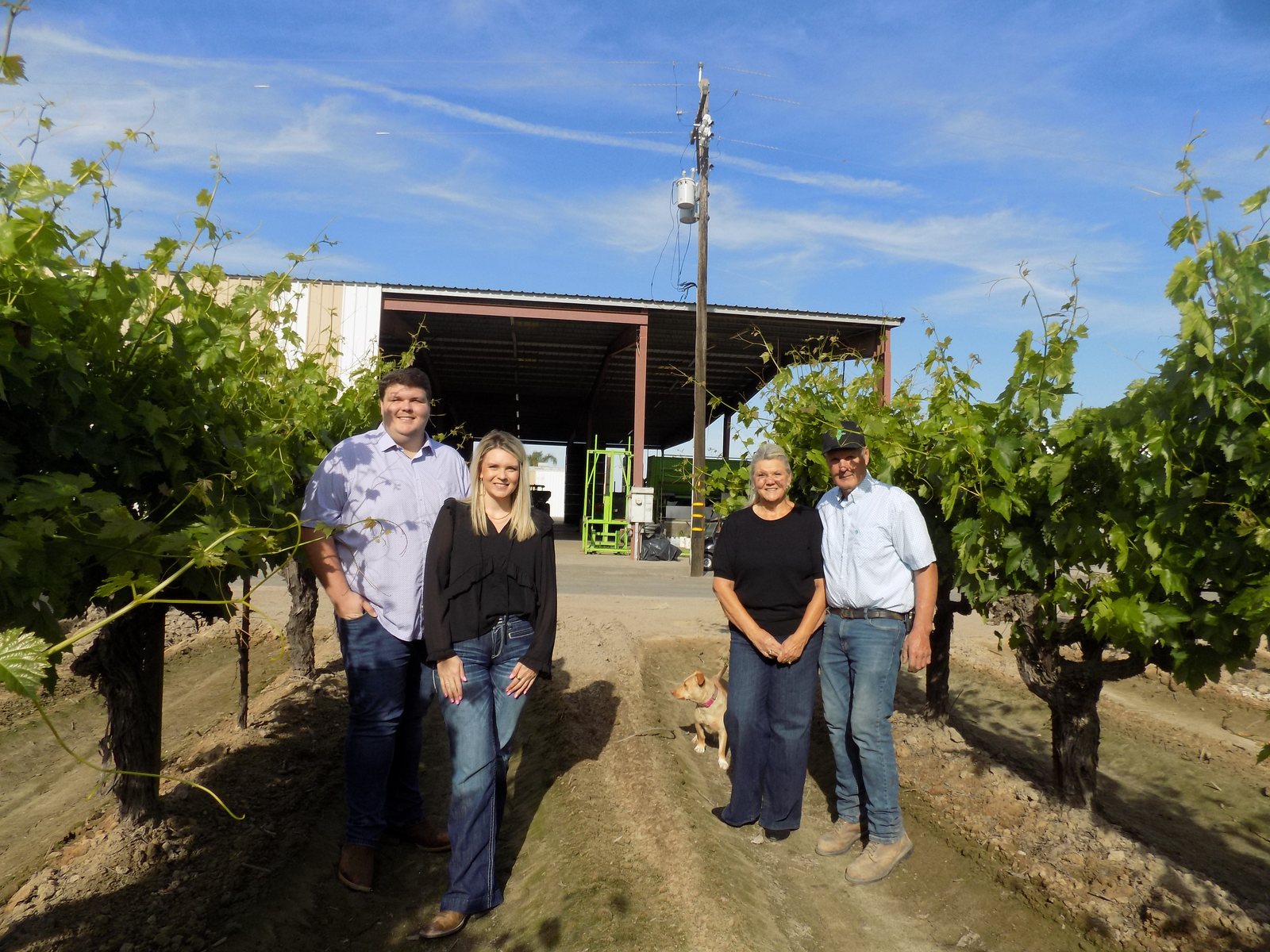
In his mid-60s, Steve Reitz gets up at 5 a.m. at the latest, seven days a week, and works between 10 and 22 hours a day. During harvest he is up at 4 a.m. In spring spray season he sprays at night, so the spray does not burn the vines.
Building up the ranch
Until 2023, Steve worked his whole life alongside his father, Gene Reitz. Gene kept a similar schedule, with no vacations, until four days before he passed away at 86. Steve has raised two crops on his own since then — both did well, despite 2025 demanding enormous extra work after post-harvest rainfall.
Gene and his wife Evelyn started farming in 1959 and moved to the current site of the farm in 1964. Evelyn did the books, worked the fields, cooked three meals a day — they did not eat out — raised four children and ran the errands. She passed away soon after Gene.
“He was a master farmer. He set us up well with the way he built up the business … he built it all himself.”
Kristie Reitz, on her father-in-law Gene
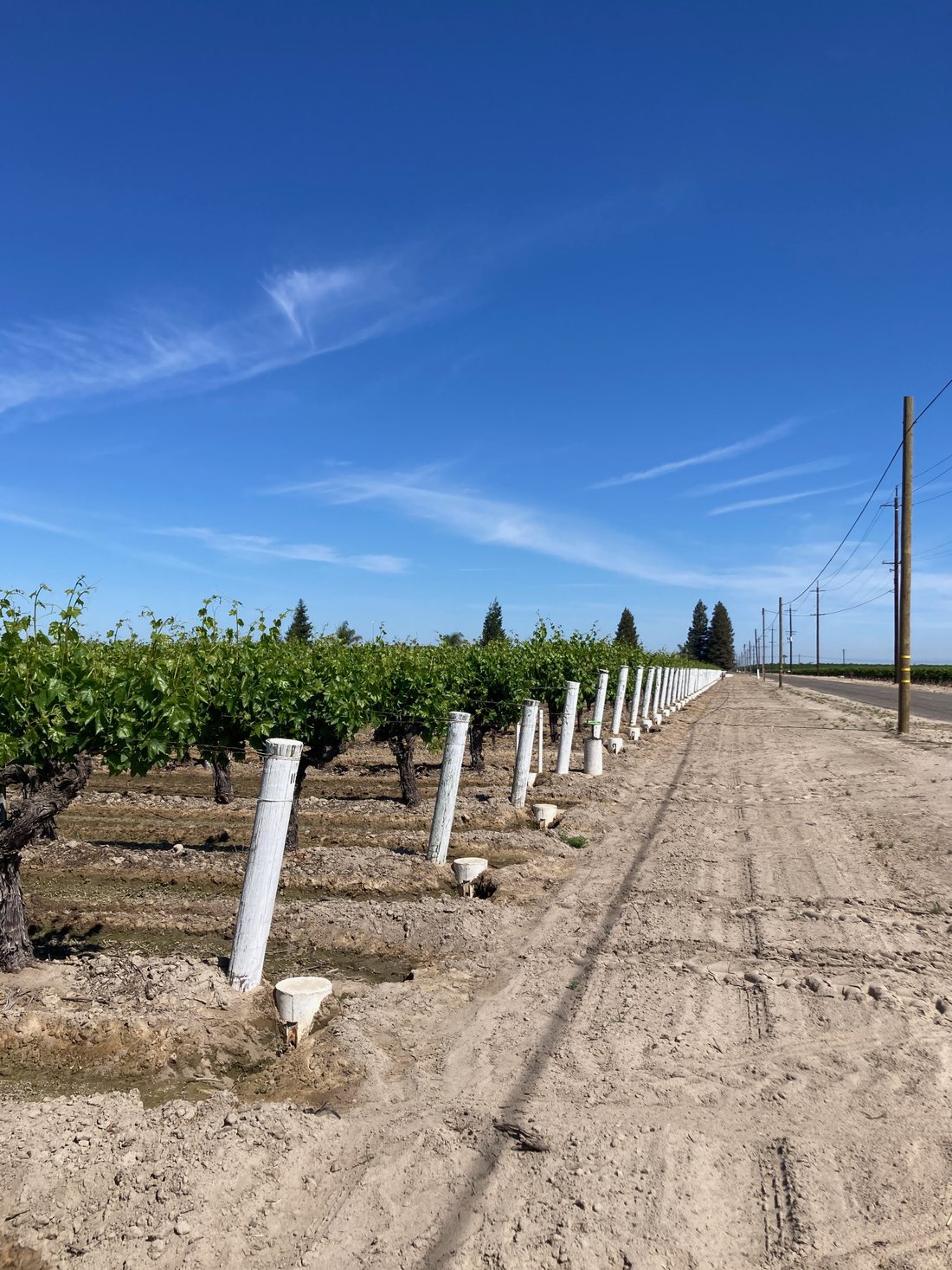
Reitz Ranches, Inc. farms 720 acres, mostly across a four-mile span, with two lots in Biola about ten miles away. The land is now split among Steve and his two sisters — Steve owns 280 acres and leases the rest. Wherever the field, every Reitz vineyard end post is painted white, which makes their vineyards easy to spot from the road.
Continuing the legacy
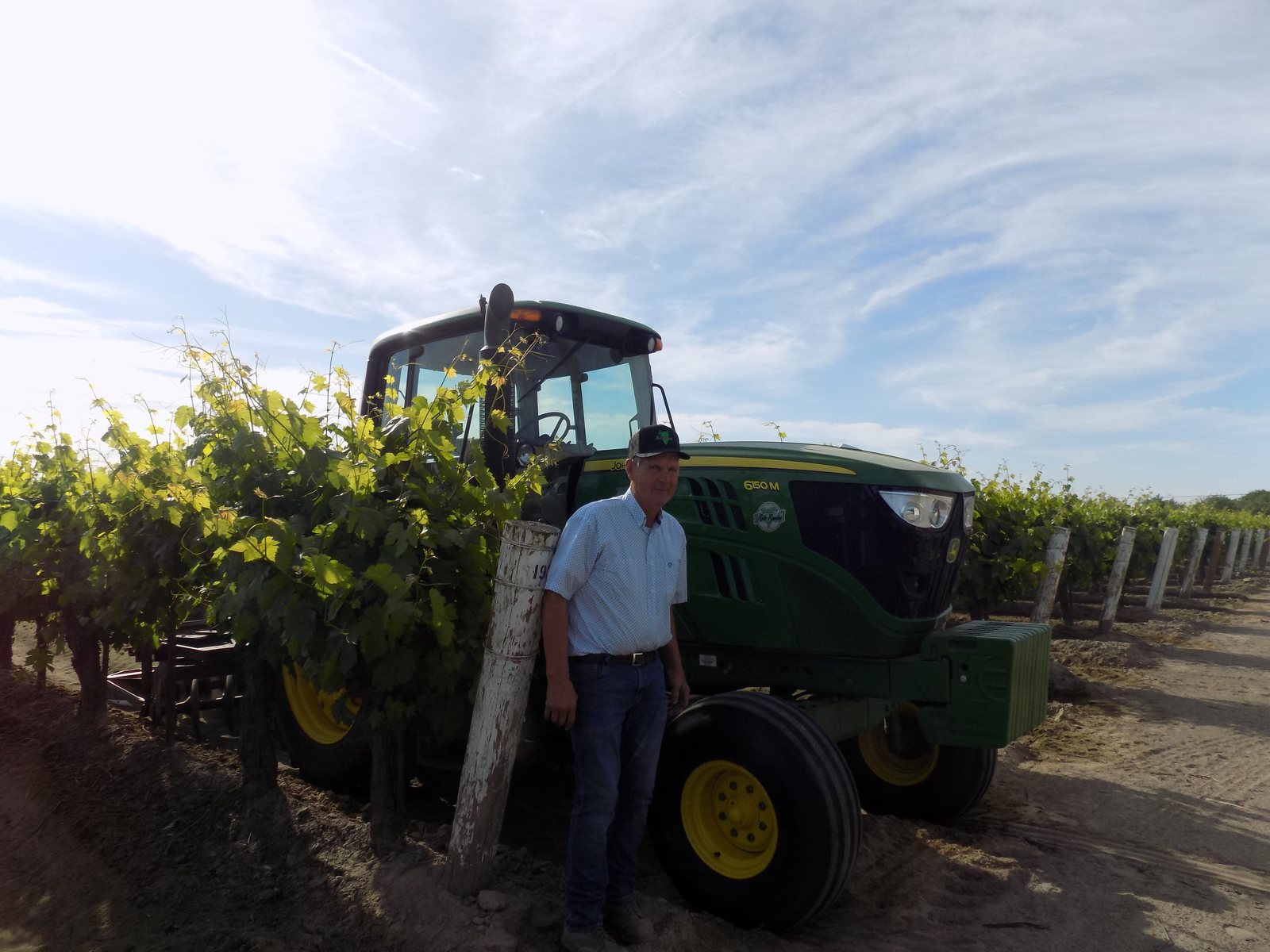
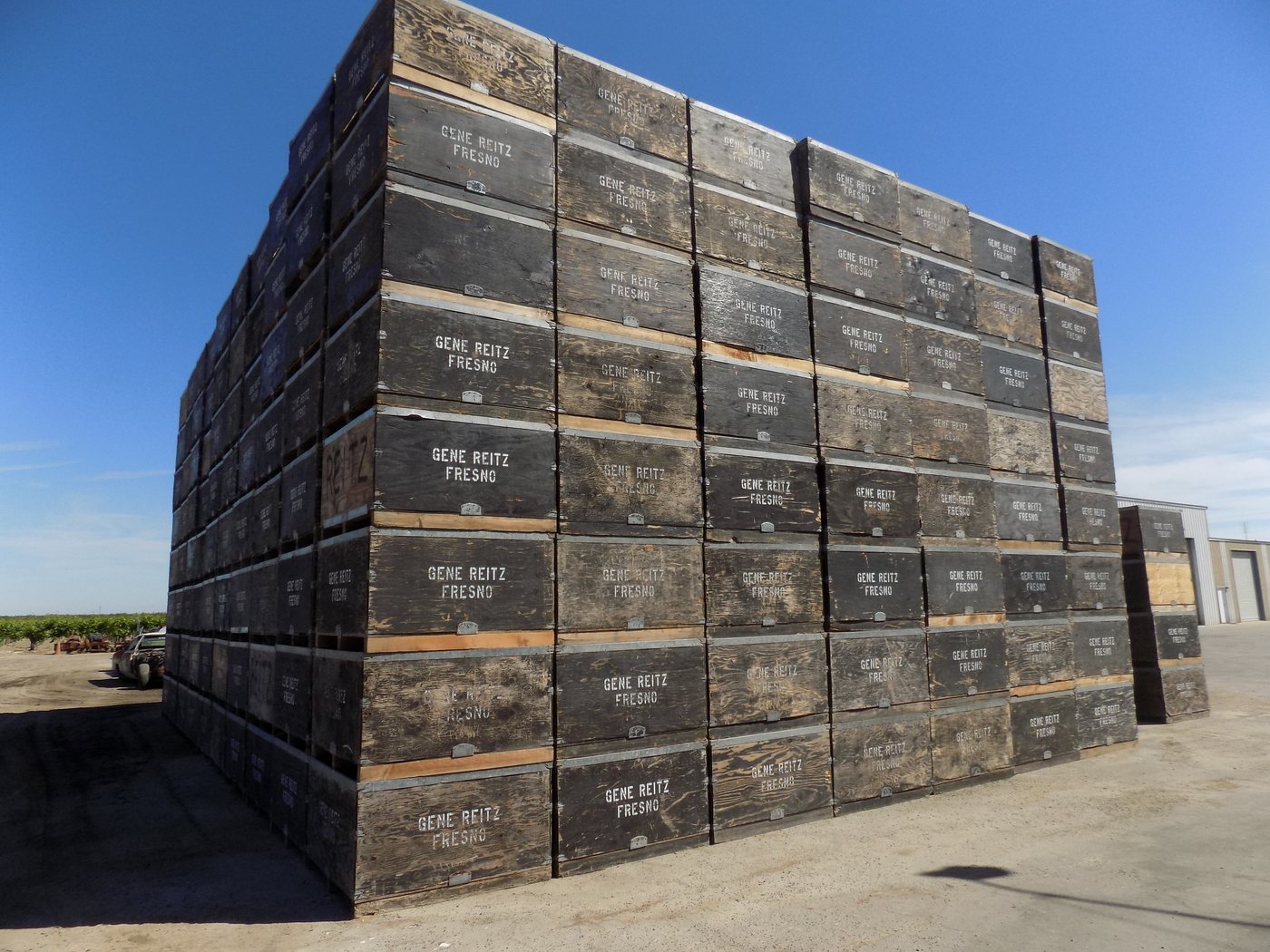
Steve started driving tractors at age five. He still drives them, and to save time he pulls three or four implements at once. He runs his own shaker, bins, spray rigs, trucks, scraper and laser leveler, levelling 40 acres a year between December and March while the vines have no leaves.
From late March through the Fourth of July he sprays every two weeks, each pass taking a week to complete, alternating sulfur and wettable fungicide to prevent mildew, with foliar fertiliser mixed in. Around the Fourth the grapes start picking up sugar. Somewhere between August 25th and 28th, picking begins — and runs into October.
The vineyards were once all Thompson Seedless. Since 2005 Steve has been switching steadily to Selma Pete: pulling each old vine, grinding it, replacing stakes and berms, replanting, then waiting two years before training the young vines to the bottom wire. Expensive and slow — and, he finds, worth it. He gets 3 tons per acre from Selma Pete against 2½ from Thompson.
“Thompson — it’s like a Model T. It can’t handle the heat, it can’t make grade.”
Steve Reitz
Every vineyard at Reitz Ranches sits in the Fresno Irrigation District. When district water is not available, Steve pumps groundwater. He furrow irrigates at a deliberately shallow slope — one inch of drop per hundred feet of row — so the water has time to penetrate and replenish the ground beneath it.
Kristie runs the business side, the errands and the books. After Gene passed, their daughter Leslie, then 28, started helping with tractor work as well as the accounts.
Harvest
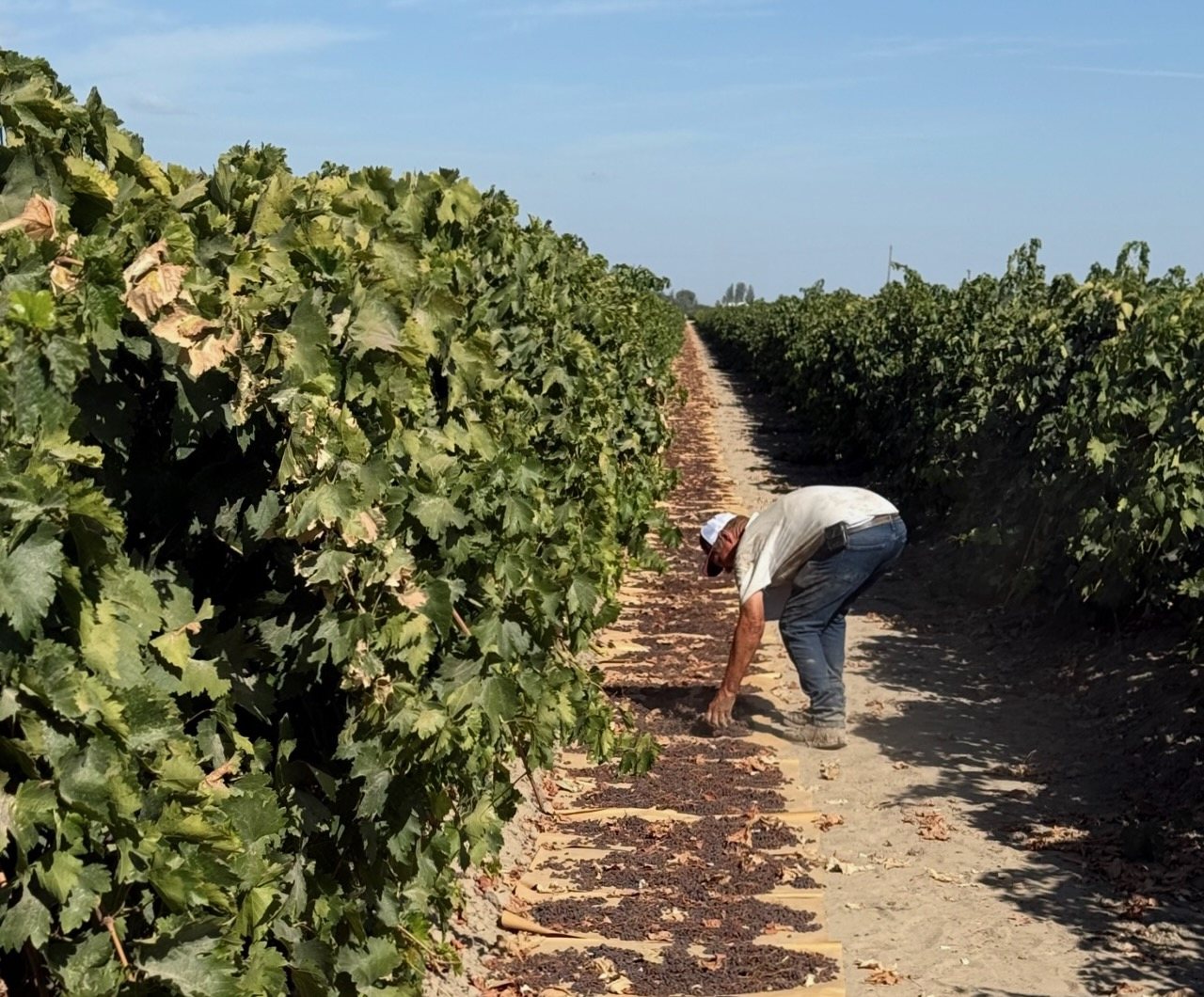
Steve owns mechanical pickers in case labour runs short, but he has not needed them in years. He prefers picking by hand. Hand picking lays the fruit in bunches on individual paper trays to dry for 10 to 14 days depending on the weather; once dry enough the trays are rolled — a biscuit roll closed on all sides, or a cigarette roll open at both ends, depending on the weight of the fruit.
After another five to eight days, they are ready to box. Steve runs 11 tractors and 55 to 60 seasonal employees through boxing, a fast, punishing job of lifting rolled trays and emptying them into bins. The Reitzes are the first to say how hard those crews work to get it done.
Boxed fruit goes to the pole barn for shaking, usually through November, to remove dirt, leaves and debris. Six to eight workers inspect for quality as a forklift dumps the bins onto the shaker. Cleaner fruit means less deducted from the grower’s price. Moisture matters too — growers typically aim for 14% or less; Steve finds 9 to 12% ideal.
He does not sign a contract at the start of a season. The crop is too unpredictable — one year hail wrecked 40 acres of vines. He meets buyers once the crop is ready, and payment typically follows one to three months later.
Pruning starts in December, tying in January. In the quieter months, or when rain keeps him out of the field, Steve maintains the equipment — mechanical work he learned from his father and in high school. He washes every tractor after every operation, which makes them last. “Grape juice ruins the paint,” he says. He changes the disc blades every year.
“He’s a perfectionist.”
Leslie Reitz, on her father
The next chapter
Leslie and her brother Robbie, an architect, plan to take over when Steve retires. If Steve is anything like his dad, he still has twenty years of farming left in him.
“Regulations and labor make it very hard to farm,” Kristie says, “but it all works itself out.” Steve’s word to fellow growers is shorter: “Hang in there — it’s bound to get better.”
“God was so good to us. We feel blessed.”
Kristie Reitz
Story and photography by Nancy Power, PhD, Assistant Editor, and the Reitz family. Reprinted with permission. The Whole Vine Festival celebrates the growers whose families built this Valley — the Reitzes among them.